Sanibel & Captiva Islands
Lee County, Florida
 Search homes in Sanibel & Captiva Islands
Popular searches: Sanibel & Captiva luxury homes
Market Data
The Sanibel & Captiva market right now
Sanibel (33957) Listings Summary
Captiva (33924) Listings Summary
Market Health
Source: Realtor.com Residential Listings Database, July 2026. Sanibel and Captiva listings are carried by the islands' own MLS rather than the feed powering this site's live statistics, so these figures come from Realtor.com's published research data (ZIP codes 33957 and 33924). Figures are updated periodically and are deemed reliable but not guaranteed.
Sanibel is the rarest thing in Florida real estate: an island whose supply is permanently capped by law. In 1974 the residents incorporated a city specifically to stop their own county from developing them, and in 1976 they adopted a land-use plan that limited the island to roughly 8,000 dwelling units against a county proposal of 30,000. Everything you like about Sanibel traces back to that decision.
The shelling, the thing everyone comes for, traces back to something even simpler. Sanibel runs east to west, while almost every other barrier island on this coast runs north to south. That orientation catches what the Gulf pushes in, and it is why people stand in the surf here at dawn with a mesh bag.
The Sanibel Rebellion
The Sanibel Causeway opened in 1963 and changed everything. By 1973 more than 56,000 vehicles a year were crossing it, and Lee County's comprehensive land use plan proposed 30,000 units on the island (a potential occupancy around 90,000 people), along with a four-lane coastal highway through refuge lands and dense high-rise development.
A coalition formed: the Sanibel-Captiva Conservation Foundation, founded in 1967, the Captiva Civic Association, the Sanibel Community Association, the chamber of commerce and the Audubon Society. On November 5, 1974, with roughly 85% turnout, islanders voted 689 to 394 to incorporate as a city. The new government immediately imposed a moratorium on building permits.
One of the leading voices in what is still called the Sanibel Rebellion was Porter Goss, a former CIA officer who had founded the Island Reporter. He became the city's first mayor, and later served in Congress and ran the CIA.
The Sanibel Plan
Adopted July 19, 1976 after nearly two years of work, the Sanibel Plan is one of the most studied land-use documents in the United States. The planning firm was Wallace, McHarg, Roberts & Todd, headed by the Scottish landscape architect Ian McHarg and the planner David Wallace; the legal drafting was by land-use attorney Fred Bosselman.
It rests on a scientific foundation called The Sanibel Report: over 300 pages and twenty in-depth studies of the island's natural systems, funded by SCCF and led by John Clark, with William K. Reilly, later EPA Administrator, helping compile the data.
The plan divides the island into six ecological zones (Gulf beach, Gulf beach ridge, interior wetlands, mid-island ridges, mangroves and bay beach), each with its own management guidelines and development regulations. Density is set by the ecological carrying capacity of each zone, with hurricane evacuation capacity factored in, producing a cap of roughly 8,000 dwelling units island-wide. The American Planning Association designated it a National Planning Landmark in 2007.
SCCF is currently producing a Sanibel Report 2.0 timed to the plan's fiftieth anniversary, with findings expected later in 2026.
For a buyer, the takeaway is simple and it is unusual: this is a market with a legally fixed ceiling on units. That is a supply constraint no other Gulf Coast community on this list has.
Captiva Plays by Different Rules
This one catches buyers off guard regularly. Captiva is not part of the City of Sanibel. It is unincorporated Lee County, and county government handles its zoning and permitting.
Practically that means a Captiva project goes before the Lee County Commission rather than a Sanibel city board, and the two islands can and do end up under different regulatory outcomes despite being connected by one road.
Captiva is reached only through Sanibel: over the causeway, then north on Sanibel-Captiva Road across Blind Pass. There is no independent mainland connection.
The largest current story on Captiva is South Seas Resort: 330 acres on the north end with over 300 third-party-owned condominiums, bought in 2021 for $125 million and since the subject of a redevelopment approaching a billion dollars. More than $100 million has gone into hurricane recovery and resiliency after the 2022 and 2024 storms, and Captiva Landing, a $26 million water park, opened at the end of December 2025. Lee County approved rezoning for the broader redevelopment, but multiple lawsuits have blocked additional hotel rooms, condominiums, a spa and a fitness center, with SCCF (the same organization behind the Sanibel Plan) as the opposing party and no resolution date. Anyone considering a South Seas condominium should go in understanding that.
The Rules That Shape the Houses
Sanibel historically limited buildings to two stories, with exceptions for structures predating 1974, and it prohibits chain restaurants except for two grandfathered establishments. That is not decoration; it is why the island still reads as an island rather than a resort strip.
The most important recent change came on November 20, 2023, when the Sanibel City Council voted unanimously to raise the height limit above sea level from 35 feet to 45 feet. The reason is elevation: after Ian, rebuilding above base flood elevation was running into the old cap. The council set a maximum without a minimum, with flexibility by property type and location.
Elevation is now the norm here rather than the exception for substantially damaged structures. Home-elevation contractors market directly to Sanibel and Captiva, and the chamber has published elevation case studies. Either budget for it or buy something already elevated.
The FEMA 50% rule is the mechanism that forces the question, and Sanibel is its own jurisdiction: Cape Coral's removal of its cumulative look-back does not apply here. Get a substantial-improvement determination from the City of Sanibel in writing before you contract for any significant work. That single phone call has saved buyers six figures.
Ding Darling and the Rest of the Island
The J.N. “Ding” Darling National Wildlife Refuge covers around 5,200 acres of Sanibel, established in 1945 by executive order signed by President Truman as the Sanibel National Wildlife Refuge, and renamed in 1967 for Jay Norwood “Ding” Darling, the Pulitzer-winning editorial cartoonist who ran the U.S. Biological Survey. It protects one of the country's largest undeveloped mangrove ecosystems and hosts over 220 bird species. The Ding Darling Wilderness, created in 1976, covers 2,619 acres; more than 40% of the refuge is congressionally designated wilderness. Wildlife Drive is open to cars and cyclists, and the visitor and education center is free.
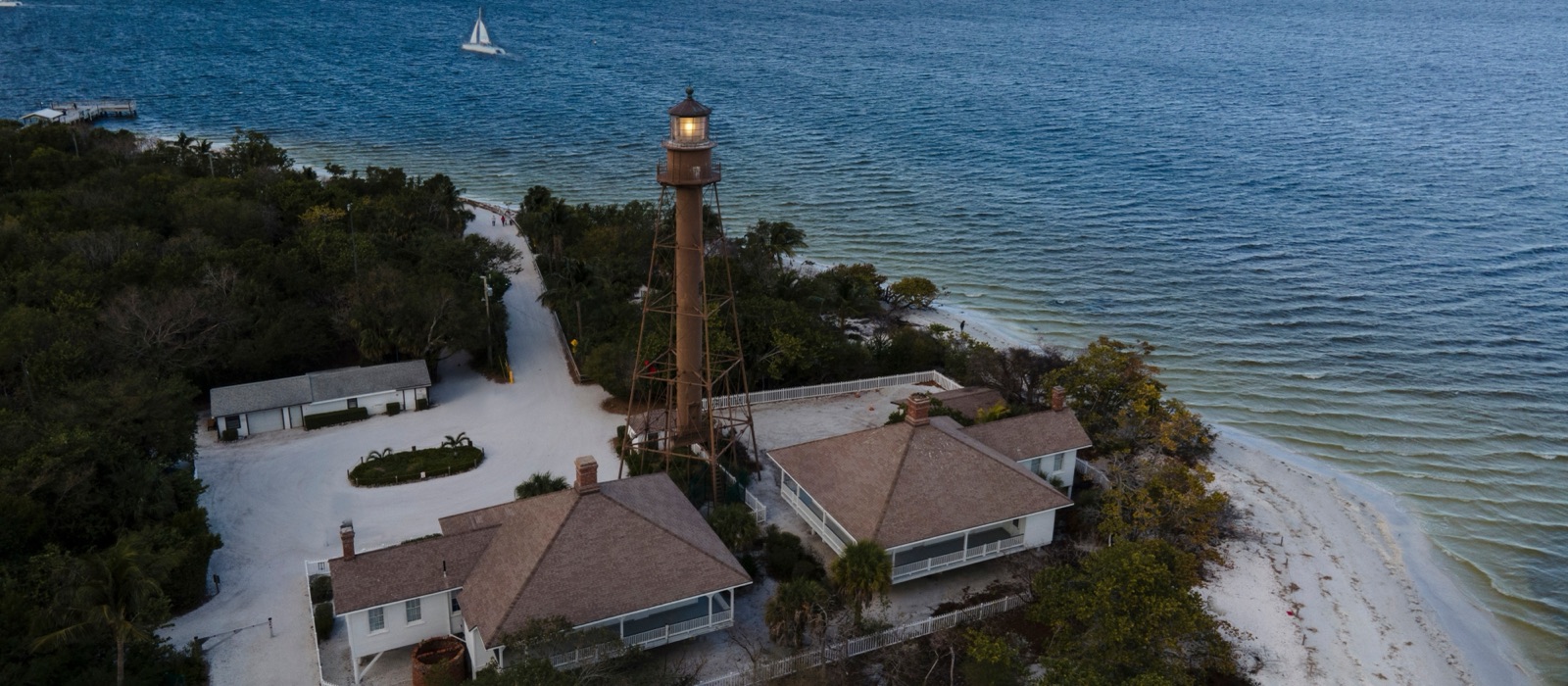
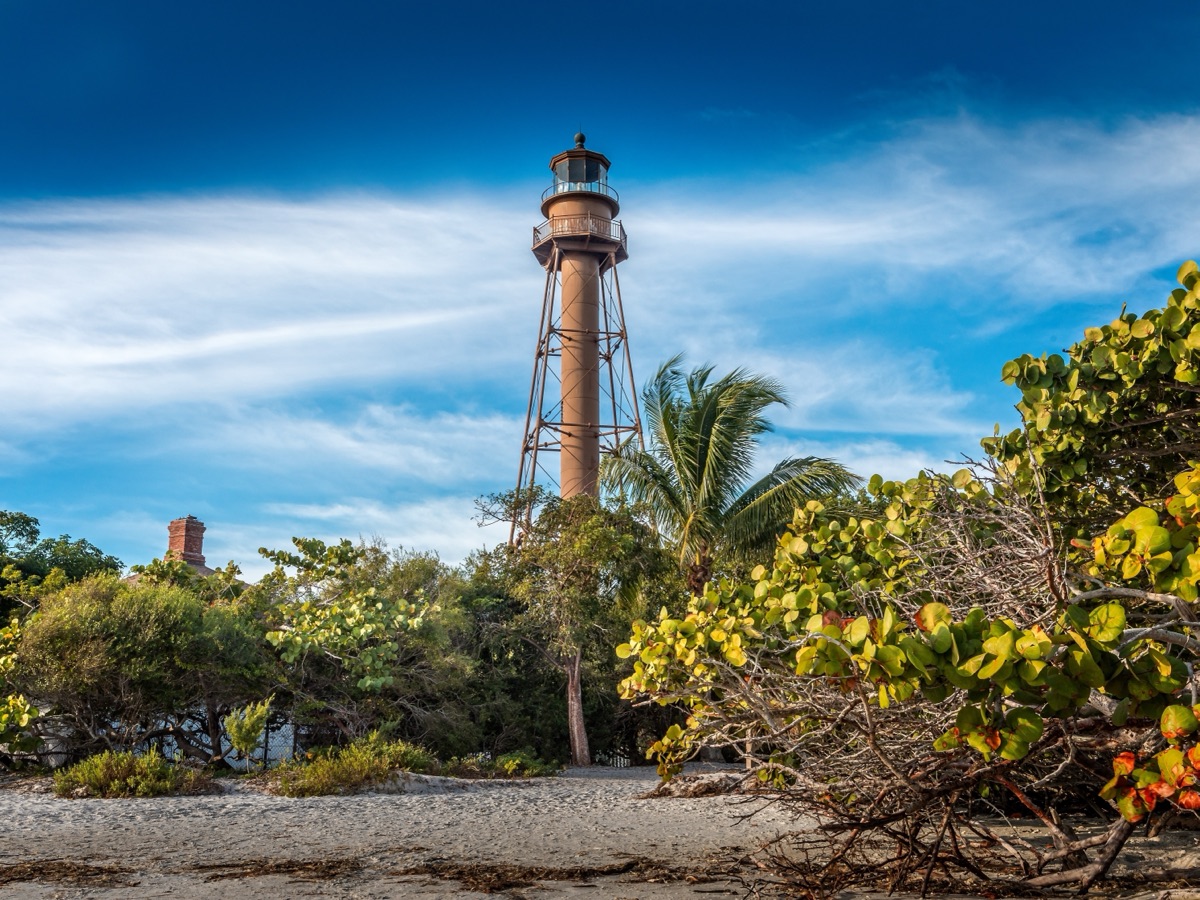
The island's 25-mile bike path network came through the storms intact. The Bailey-Matthews National Shell Museum is open with an expanded second floor, and the Sanibel Historical Museum and Village is operating. The Sanibel Lighthouse, completed in 1884, stands at the island's east end.
On the recovery: a great deal is back, and some is not. Hotels including the Sanibel Inn, Sundial, Casa Ybel, Sanibel Siesta on the Beach, Sanibel Moorings and Signal Inn are operating, and Shalimar Beach Resort opened in September 2025, the first newly built hotel on Sanibel in more than forty years. On the restaurant side the Bubble Room reopened in July 2025 and the Mucky Duck in March 2026 after Helene and Milton repairs, alongside Doc Ford's, the Lighthouse Café, Mudbugs, Over Easy, Wickies and Cheeburger Cheeburger. But Castaways, West Wind Island Resort and Beachview Cottages remain empty lots, the Dairy Queen closed permanently, and the tree canopy and landscaping were still recovering as of the winter of 2025–26. Bob would rather you hear that from him than notice it on the drive in.
The Causeway
There is one road on and off these islands, and in 2022 it failed.
The original causeway opened in 1963 and was replaced in 2007 with a three-section bridge including a high span for sailboat passage. On September 28, 2022, Ian damaged portions of the three-mile causeway and left Sanibel and Captiva with no road access at all, stranding residents. A contractor was selected on October 4 and temporary repairs reopened it to residents on October 19: fifteen days, nearly two weeks ahead of schedule.
The permanent reconstruction that followed used steel sheet pile protection, armor stone barged in from Alabama and Virginia quarries, rebuilt approaches, five new seawalls built during hurricane season, and restored drainage and lighting. It was Florida's first phased design-build contract of its kind, and it reached substantial completion in May 2025. The completed sections stood up to Hurricanes Debby, Helene and Milton while the rest was still being built.
Tolling is all-electronic, with a transponder rate lower than pay-by-plate and off-peak discounts. Rates and any resident discount programs change, so check leewayinfo.com for current figures.
The islands are, and will remain, dependent on a single tolled causeway. That is the deal. It is also a large part of why they stayed the way they are.
Golf, Schools and Practical Notes
Golf on the islands: Sanibel Island Golf Club, eighteen holes, semi-private and open to the public; The Dunes Golf & Tennis Club, eighteen holes, public; The Sanctuary Golf Club, eighteen holes, private and member-owned; and a nine-hole course at South Seas on Captiva.
Schools are the School District of Lee County, which runs open enrollment. The Sanibel School is a K–8 district school on the island; it was heavily affected by Ian, and reporting on its campus timeline was in flux, so Bob confirms current status directly with the district. Captiva students attend Lee County schools as well.
Hospital care is on the mainland, across the causeway. For a lot of buyers on these islands that is the single most important practical consideration after the flood zone, and it should be weighed honestly.
One correction worth making, since it shapes how people think about risk here: Ian's Florida landfall is often described as “on Sanibel” or “near Fort Myers.” The National Hurricane Center's official report places the primary landfall near Punta Gorda, on September 28, 2022, as a Category 4 with 125-knot winds. Sanibel and Fort Myers Beach were on the destructive right-front side of the storm, which is why their surge was catastrophic. Substantial portions of Sanibel sit in FEMA VE and AE zones, so pull the FIRM for the specific parcel and confirm with the City of Sanibel before you rely on any general statement, including Bob's.
Sanibel and Captiva are a legally supply-constrained market with one road, strict rules, real recovery still underway, and a character that nowhere else on this coast has managed to hold onto. Buyers here are not casual, and the diligence is not casual either: flood zone, elevation certificate, substantial-improvement determination, and a clear-eyed look at access and healthcare. If the islands are where you are headed, Bob will do that work properly with you before you fall for a view.
Tile: licensed from Shutterstock (image 2726708997). Wide header: licensed from Shutterstock (image 2691453561). Gallery: licensed from Shutterstock (image 2254649535).