Punta Gorda Isles
Charlotte County, Florida
 Search homes in Punta Gorda Isles
Live Market Data
The Punta Gorda market right now
Punta Gorda Listings Summary
Currently listed from $34,999 to $2,995,000.
Punta Gorda vs. Charlotte County
Market Health
A market with more pendings than new listings is absorbing inventory; the reverse means selection is growing. Ask Bob what it means for your timing.
Residential listings for Punta Gorda from the MLS as of November 26, 2026. Punta Gorda Isles listings carry a Punta Gorda city designation in the MLS, so these figures cover the city of Punta Gorda as a whole. Figures update automatically and are deemed reliable but not guaranteed.
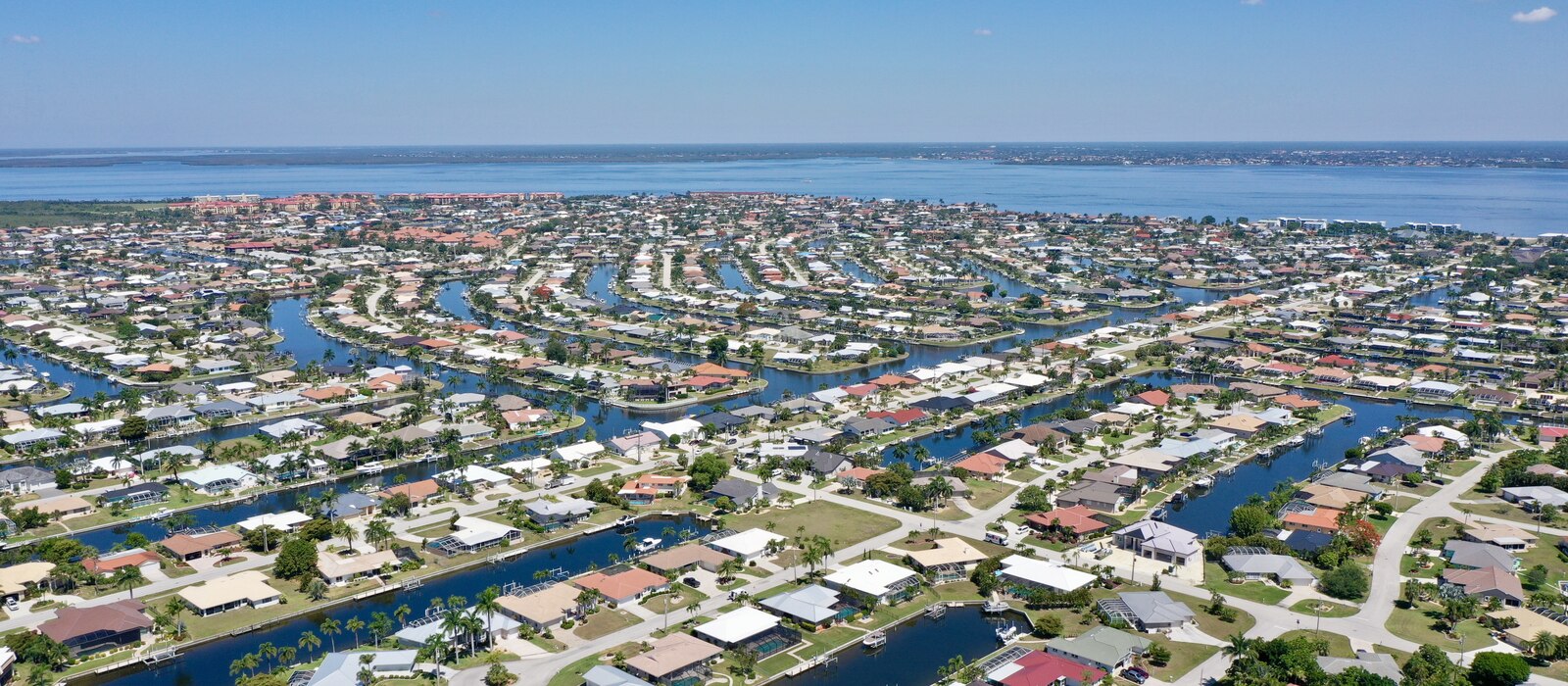
Punta Gorda Isles is the reason a lot of people end up in Punta Gorda in the first place. It is a saltwater canal community carved out of the harbor's edge, where the majority of homes have a seawall, a dock, and a straight shot out to Charlotte Harbor and the Gulf beyond. You can leave your back yard, clear the harbor, and be in open water without ever putting the boat on a trailer.
A note on bias: Punta Gorda Isles is Bob's own neighborhood, and he has lived here for close to ten years. He knows which canals hold their depth, where the seawalls have been replaced and where they haven't, which streets get the afternoon breeze off the water, and what actually happens on these blocks after a storm. That is not information you can pull off a listing sheet.
Dredged Out of the Mangroves: A Short History
Punta Gorda Isles began on the last day of 1957, when four men (Al Johns, Bud Cole, Sam Burchers, and Bob Barbee) formalized Punta Gorda Isles, Inc. and set about turning several hundred acres of mangrove and low ground on the edge of Charlotte Harbor into buildable waterfront. By 1968 the company had acquired roughly 2,300 additional acres, and the pattern that defines the neighborhood today (long finger canals, wide turning basins, and lots that back to water rather than to each other) was set.
What they built is unusual, and it is the single most important thing for a buyer to understand: PGI has more than 50 miles of seawall, and it is maintained by the City of Punta Gorda rather than by individual owners or an HOA. In most Florida canal communities a failing seawall is the homeowner's problem and can be a five-figure surprise. Here that infrastructure is the city's responsibility. It is a quiet advantage that does not show up in a listing photo but matters enormously over a twenty-year hold.
The other consequence of that original plan: better than seven in ten homeowners in the area live on the water. PGI was not a subdivision that happened to have a lake. Water was the entire premise.
Sailboat Water vs. Bridged Water: Know the Difference
If you take one thing away from this page, make it this. Not all canal-front in PGI is the same, and the difference is worth real money.
Some canals run out to Charlotte Harbor with no fixed bridge in the way. Those are the sailboat-access lots, and they carry a premium because a sailboat's mast, or a larger flybridge cruiser, can get out without clearance being a question. Other canals are perfectly good water but pass under a fixed bridge on the way out, which caps the height of what you can keep behind the house. Both are excellent. They are simply not the same product, and two homes that look identical online can be very differently priced because of it.
This is the first thing Bob checks on any PGI listing, before square footage, before the kitchen. Tell him what you plan to keep on the lift and he can tell you which streets to look at and which to skip.
Fishermen's Village: The Marina at the Front Door
Where PGI's water meets the harbor, you run almost directly into Fishermen's Village, and that proximity is one of the neighborhood's genuine luxuries. It is a full marina with transient and annual slips, fuel on the water, waterfront restaurants, and a covered promenade of shops upstairs.
In practice it means you can untie from your own dock, run a few minutes, tie up for lunch, fill the tank, and be home before the afternoon storms. Boaters who have lived elsewhere understand how rare that is. Most people have to plan a day around a fuel stop; here it is an errand.
The site itself has history. It began as the Maud Street Dock, built in 1928 to replace the older King Street Pier as home to Punta Gorda's commercial fishing fleet, and it worked as a fish dock into the 1970s. Rather than tear it down, the city let it become something else: Fishermen's Village opened on that exact footprint in February 1980.
The Isles Yacht Club
Founded in 1976 and sitting at 1780 W. Marion Avenue on the water at the edge of the neighborhood, the Isles Yacht Club is the social anchor of PGI. It runs around 900 members, and the current clubhouse opened in 2006.
It is more than a place to keep a boat. There is a marina and dockmaster's office with a boaters' lounge, Har-Tru tennis courts, a fitness center, bocce courts, a billiards room, dining rooms that stay busy through season, and a fleet of Harbor 20 sailboats the club uses for lessons and racing. For a lot of people who move here without knowing anyone, the yacht club is how the neighborhood stops being a street and starts being a community.
Golf Inside the Neighborhood: St. Andrews South
St. Andrews South Golf Club sits right in the middle of PGI; you don't drive to it, you're already there. It opened in the early 1980s, laid out by Florida architect Ron Garl, and it is a private 18-hole championship course.
The character of it is classic Garl and classic old-Florida: mature landscaping, water genuinely in play, and a routing that asks for placement and club selection rather than raw distance. It is a members' course with a members' culture: walkable, social, and busy in season without ever feeling like a resort. For buyers who want golf and water in the same purchase, having a private club threaded through your own neighborhood is a rare combination in this price band.
Worth knowing: a fair number of PGI homes back directly to the course rather than to a canal. Those tend to price below comparable waterfront while keeping the same neighborhood, the same seawall-maintained streets, and the same drive to downtown.
Ponce de Leon Park
At the far western end of the neighborhood, where the land runs out into Charlotte Harbor, is Ponce de Leon Park: sixteen acres and easily the best sunset in the city.
It has a public boat ramp, a small beach, a fishing pier, a playground, picnic pavilions with grills, and a boardwalk out through the mangroves. It also hosts the Peace River Wildlife Center, a non-profit sanctuary caring for injured and non-releasable native birds and animals: pelicans, hawks, owls, tortoises. It is free to walk through and it is one of the genuinely charming things about living here.
The park takes its name from Juan Ponce de León. Local tradition holds that the explorer was wounded by a Calusa arrow somewhere along this stretch of coast on his 1521 expedition, and a monument in the park marks that association, though historians still debate the precise landing site. True or not, it has given this corner of the harbor its name for generations.
The Smaller Parks
PGI is not short on places to walk. Punta Gorda maintains more than twenty parks citywide, and several sit in or beside the neighborhood.
Gilchrist Park runs along the harbor just past the PGI entrance, with paved paths, tennis and pickleball, playgrounds, and open lawn on the water, and it connects into the Harborwalk path system, so you can walk from the edge of the Isles into downtown without getting in the car. Closer in, smaller neighborhood parks and greens are scattered through PGI itself, and the seawall streets themselves are the real walking route: flat, quiet, and almost always with water on one side.
Errands Without Leaving the Neighborhood
Two small commercial pockets serve PGI directly, and they are a bigger quality-of-life factor than people expect.
The Bal Harbor Plaza area on Bal Harbor Boulevard and the shops along Aqui Esta Drive cover the ordinary week (a grocery run, a pharmacy, a hair appointment, a coffee, a bite out) inside the neighborhood, at neighborhood scale. You are not fighting Tamiami Trail traffic for a gallon of milk. And downtown Punta Gorda, with its restaurants, Saturday farmers market, and the History Park Sunday market, is a few minutes the other direction.
The Condominium Buildings
PGI is not only single-family. Several well-regarded condominium buildings sit along the widest water in the neighborhood (the deep basins and harbor frontage), and they occupy a niche that is hard to match anywhere else in the county.
The appeal is straightforward: full waterfront views, many with deeded or assigned dockage, elevator buildings with secure parking, pools and social rooms, and an exterior somebody else maintains. For seasonal owners, for anyone downsizing out of a big waterfront house but unwilling to give up the view, or for a buyer who wants to lock the door and fly north for five months, a PGI condo does something a single-family home cannot.
Buildings vary widely in age, reserves, milestone-inspection status, and pet and rental rules, and post-2022 those differences matter more than they used to. This is one of the places Bob earns his keep: he can tell you which buildings are well run and which have work coming.
What's Left to Build On
PGI has been under construction since 1957, and it is now largely built out. Vacant homesites are the exception rather than the rule, and the inventory of them shrinks every year as new construction fills the remaining gaps, which is exactly why you see brand-new houses standing between homes from the 1970s and 80s.
That scarcity cuts both ways. If you want to build, the lots that remain are worth moving on, because the good ones (sailboat water, southern exposure, wide basin views) do not sit. If you're buying an existing home, it means your neighborhood is finished: you are not buying into a decade of construction traffic.
If you want the current count of available vacant lots in PGI, ask Bob. That number moves month to month and he'd rather quote you today's than a stale one.
Where Bob Is, Literally
Bob's office, Five Star Realty of Charlotte County, sits at 1203 W. Marion Avenue, right at the entrance to Punta Gorda Isles and directly across from Fishermen's Village. It is about as embedded in this neighborhood as an office can be.
That matters more than it sounds. When you're looking at a PGI home and want to see it again, or want someone to walk the seawall with you, or want a straight answer about a canal before you write an offer, Bob is minutes away, and he lives here.
Punta Gorda Isles is where Bob chose to live, and after almost ten years here he still thinks it's the best combination of water, walkability, and value on this coast. If you're considering it, talk with him before you tour. Five minutes on the phone about what you want to keep on the dock will save you a lot of driving.