Cape Coral
Lee County, Florida
 Search homes in Cape Coral
Popular searches: Cape Coral luxury homes
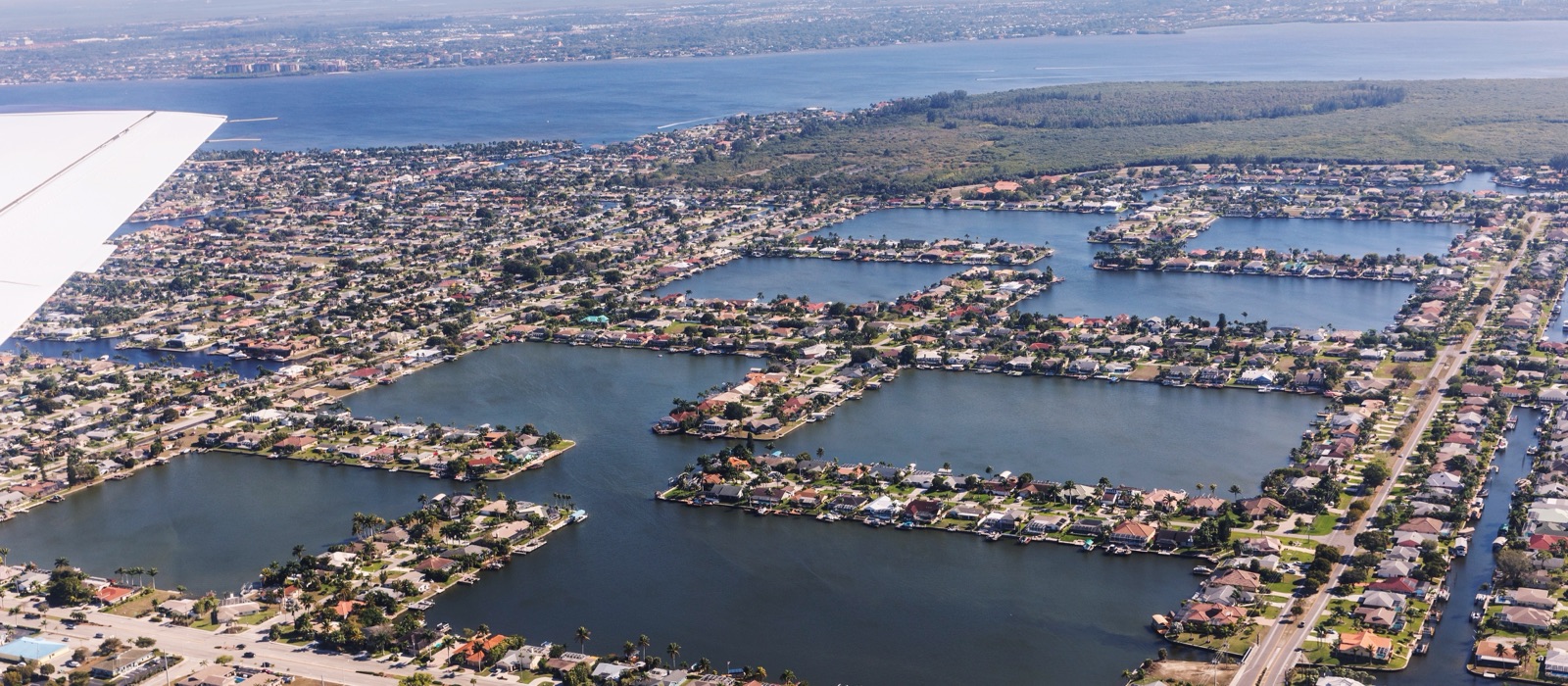
Cape Coral has more than 400 miles of navigable canals (widely cited as more canal mileage than any other city on earth), and essentially every one of them was dug by hand and dredge in about a decade by a mail-order land company. If your reason for moving to Florida is a boat, this is one of the two or three markets in the state you have to look at.
It is also the market where the same-looking house can be worth six figures more or less depending on one thing nobody can see in the listing photos: what kind of water it sits on. Get that wrong and you have bought a very nice house you cannot take your boat out of.
Direct, Indirect, Freshwater: the Only Three Words That Matter
Cape Coral waterfront comes in three tiers, and telling them apart is the whole game.
Direct Gulf access means no bridges and no locks between your dock and the Caloosahatchee, and from there the Gulf. It suits sailboats and larger vessels, and it commands the biggest premium. It is concentrated in the older southeast Cape and, since 2025, in a large part of the southwest Cape.
Indirect access means you pass under one or more fixed bridges to get out. That is perfectly workable for a center console, a bay boat or a pontoon, and completely unworkable for a sailboat with a mast.
Freshwater canals are a closed system with no connection to the river or the Gulf at all. They are lovely for kayaking, fishing and the view, they are the least expensive waterfront tier, and they are found mostly in the northeast Cape and parts of the northwest.
Canal bridge clearances here typically run six to ten feet above mean high water, with close to half the canal bridges under eight feet and the fixed bridges topping out just under twelve. Sailboat-access lots for a 35-foot mast are genuinely rare and cluster in the southeast. The one instruction Bob gives every boating buyer: verify clearance at mean high water, not at the posted average, before you commit to a vessel-dependent purchase.
The Chiquita Lock Came Out in July 2025
This is the most material recent change in the Cape Coral waterfront market, and a lot of listing copy has not caught up with it.
The Chiquita Lock was built in the 1980s to filter canal water before it reached Matlacha Pass and the Caloosahatchee estuary. Hurricane Ian damaged it in 2022, and it was removed on July 25, 2025.
The practical effect is that a large block of southwest Cape addresses that were classified as indirect access are now, functionally, direct. The lock had historically added twenty to thirty minutes to each leg of a Gulf run and constrained vessel size. That is a real change in usability and, over time, in value.
It was not uncontroversial: the Sanibel-Captiva Conservation Foundation and Calusa Waterkeeper opposed removal on water-quality grounds, and the long-term estuary effects are still being studied.
What it means for you: any access classification written before July 2025 on a southwest Cape property may be stale in either direction. Bob verifies current access on every waterfront listing rather than trusting the MLS field.
Built by a Mail-Order Land Company
Jack and Leonard Rosen bought the 1,724-acre Redfish Point tract in Lee County in 1956 for $678,000, formed what became the Gulf American Land Corporation in the late 1950s, and opened a sales office in January 1958. Within five years they had raised homesites roughly five and a half feet above sea level by dredging millions of tons of fill out of miles of canals, three yacht basins and fourteen artificial lakes.
The lots were sold by mail order and in hotel banquet rooms across the country, with the sales contracts factored to fund the next round of infrastructure. Gulf American eventually went bankrupt after failing to get state permits for further canal construction. Cape Coral incorporated in August 1970, with a population of 10,193; the referendum passed 2,067 to 1,798, and the first council meeting was held that December.
The city today has around 1,100 miles of roadway and passed 194,000 people in the 2020 Census, up 26% over the decade. The legacy of that platting is everywhere: tens of thousands of individually deeded lots means Cape Coral builds scattered-site new construction one house at a time rather than in tract subdivisions. It is why you can still buy a lot and build in an established neighborhood here, and it is why the utilities question below exists.
The UEP: A Cost Buyers Routinely Miss
Large parts of northern Cape Coral are still on well and septic, and the city is systematically converting them through the Utilities Extension Program: city water, sewer and irrigation, plus road and storm drainage reconstruction. It is funded by special assessments on the properties that receive it.
As of the city's current published status, North 1 (East and West) is under construction, North 2 is complete with connections underway, North 3 is in design, and North 5 and North 6 are in study. Assessments are calculated on an Equivalent Parcel unit of 10,000 square feet, and owners can prepay at a discount or amortize over twenty to thirty years on the tax bill. Developed properties must connect within 180 days of receiving the Notice of Availability, and the connection itself typically runs $2,000 to $2,500, with grants up to $2,000 for income-eligible homeowners and deferrals available under federal income guidelines. The city's UEP hotline is 1-833-227-3837.
Here is the part that catches buyers: an unpaid amortized assessment rides on the tax bill and transfers with the property. On any northern Cape purchase Bob pulls the parcel's UEP status and finds out whether an assessment has been levied, prepaid or amortized, and he gets that in writing. Occasionally it is worth negotiating the seller paying it off at closing.
Where the Housing Is
Southeast Cape is the oldest developed quadrant and holds the oldest direct-access canal inventory, generally 1960s and 70s vintage, with a lot of teardown and rebuild activity. Southwest Cape is newer and includes the two marina villages, Cape Harbour and Tarpon Point, with their dining and retail. Northeast and northwest Cape are largely freshwater or non-waterfront and carry the bulk of new single-family construction, and most of the remaining UEP work.
Most of Cape Coral's single-family lot inventory sits outside a mandatory HOA, which suits buyers who want to keep a boat, an RV or a trailer on their own property. HOA and gated product exists but is concentrated in specific subdivisions and the marina villages.
Golf includes Coral Oaks, the city's municipal course, along with Palmetto-Pine Country Club, Hunters Run and Royal Tee. Access models change, so Bob checks current terms with the club rather than repeating a listing.
Everyday Life and the Beach Question
Cape Coral has no Gulf-front beach of its own. That surprises people, so it is worth saying early. Yacht Club Community Park in the southeast Cape is the city's historic public beach and pier complex on the river, and for Gulf sand you are driving to Fort Myers Beach or Sanibel, or taking the boat.
What the city does have is SunSplash Family Waterpark, Four Mile Cove Ecological Preserve, Horton Park's public ramp, the marine facilities at Cape Harbour and Tarpon Point, Cape Coral Hospital since 1977, and the Cape Coral History Museum, which is well worth an hour if you want to understand how this place came to be.
Two bridges connect to Fort Myers: the Cape Coral Bridge, 3,400 feet, opened in 1964, and the Midpoint Memorial Bridge. Both are tolled, all-electronically since October 2021, with a transponder rate lower than pay-by-plate and off-peak discounts. Rates change, so check leewayinfo.com for the current numbers; a free transponder is worth getting the week you move.
Schools are the School District of Lee County, which runs an open-enrollment system rather than automatic assignment by address, worth understanding early, because it works differently from most districts. High schools in Cape Coral include Cape Coral High School, Mariner, Ida S. Baker, Island Coast and North Nicholas.
Ian, the 50% Rule, and Flood Insurance
Hurricane Ian's Lee County toll was enormous: at least 52,514 structures impacted, 5,369 destroyed and 14,245 with major damage. Cape Coral's damage was principally storm surge along the southern and southwestern canal frontage and the Caloosahatchee, rather than the wholesale destruction the barrier islands saw.
The rule that shapes what happens next is FEMA's 50% rule. A structure that sustains damage, or receives improvements, exceeding half its market value has to be brought into compliance with current construction requirements, which for an older Cape Coral house generally means elevating it. That can turn a planned cosmetic remodel into a full elevation rebuild. Cape Coral did remove its five-year cumulative rule after Ian, so prior work no longer stacks into the calculation, but note that this was a Cape Coral action and does not apply in Sanibel, unincorporated Lee County or Charlotte County: four different regulators, four different rulebooks.
Bob's standing advice: before you sign a renovation contract on an older waterfront house here, get a written substantial-improvement determination from the city building department. Not after.
On flood insurance, understand that it is a separate policy from homeowners insurance and on a separate trajectory. Florida's homeowners market has softened: Citizens recommended a statewide average decrease of 2.6% effective June 2026, its policy count is down sharply from its 2023 peak, and seventeen new carriers have entered the state. NFIP flood pricing under Risk Rating 2.0 has moved the other way in Lee County. Get a flood quote in writing during your inspection period, with the elevation certificate and the current FIRM panel in hand. FEMA's Community Rating System discounts in Lee County have also been in flux since 2024, so Bob confirms the current class with the city floodplain office rather than quoting a percentage that may have changed.
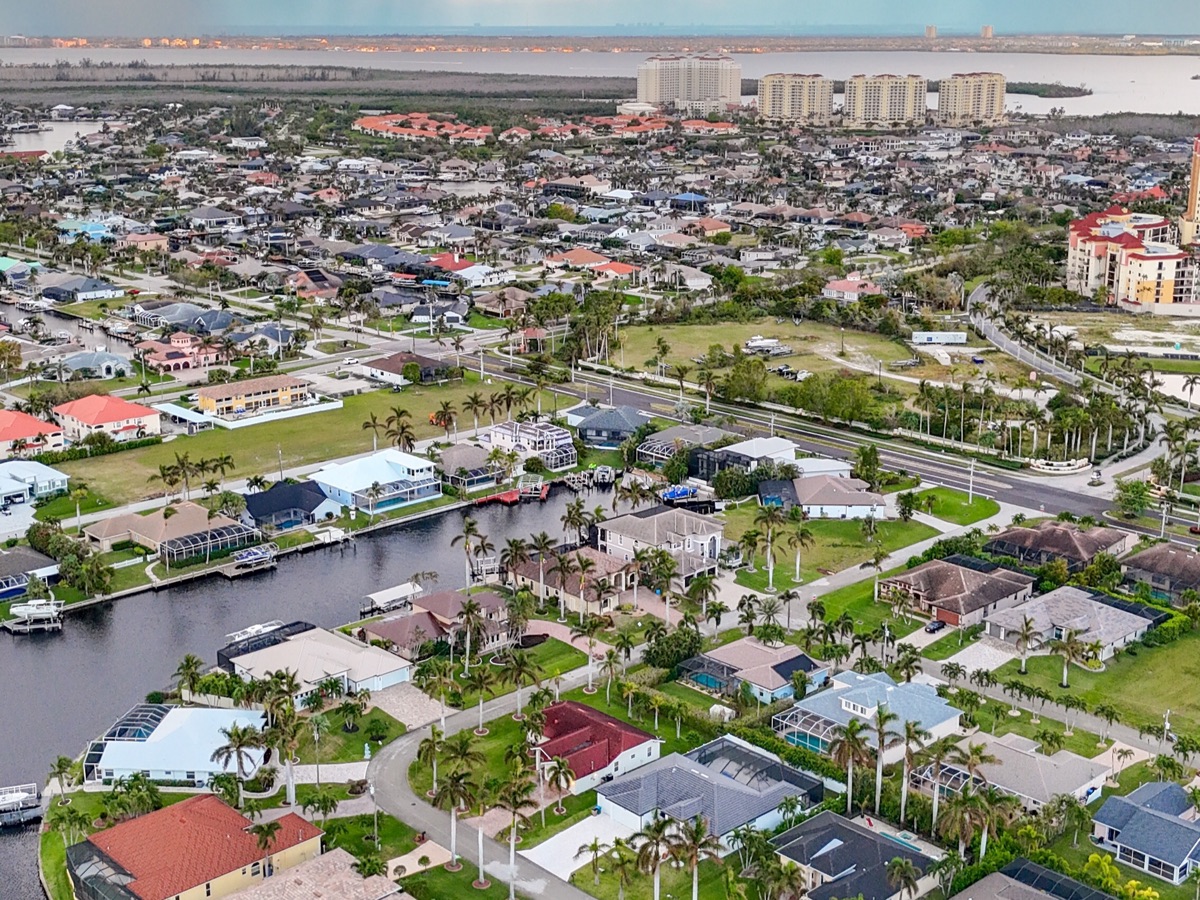
Cape Coral is the best pure boating value in Southwest Florida, and it is the market where working with someone who actually knows the water matters most. Tell Bob the boat first (length, draft, and air draft with the tower up), and he will build the search around water that works for it. Everything else about a house you can change. The canal in the back you cannot.
Tile and header: licensed from Shutterstock (image 624604556). Gallery: licensed from Shutterstock (image 2638003921).