Arcadia
DeSoto County, Florida
 Search homes in Arcadia
Popular searches: Arcadia acreage for sale
Live Market Data
The Arcadia market right now
Arcadia Listings Summary
Currently listed from $89,900 to $4,800,000.
Arcadia vs. DeSoto County
Market Health
A market with more pendings than new listings is absorbing inventory; the reverse means selection is growing. Ask Bob what it means for your timing.
Residential listings for Arcadia from the MLS as of November 28, 2026. Figures update automatically and are deemed reliable but not guaranteed.
Get the Arcadia numbers by email once a month Free, one email a month, unsubscribe any time.
Arcadia is twenty-six miles up US-17 from Punta Gorda, and it is the same river. The Peace River runs past the west side of the city on its way down to Charlotte Harbor, which makes this the one inland market Bob covers with a genuine hydrological connection to Punta Gorda.
It is a historic county-seat town of four square miles with an intact brick downtown, one of the largest concentrations of antique dealers in Florida, the state's oldest and largest rodeo, a public golf course from 1922 with original holes still in play, and megalodon teeth in the river. It is also nothing like the coastal markets, and this page is written on the assumption that is exactly why you are looking at it.
The Fire That Built Downtown
On Thanksgiving Day, November 30, 1905, a fire that started in a livery stable destroyed most of downtown Arcadia. The town had no functioning water system and no fire department. Damage came to roughly $250,000, though remarkably nobody was killed, and recovery took years. Only three structures survived: the Carlton Building from around 1904, the W.H. Seward Stores from 1900, and the First National Bank from 1905.
What happened next is why the town looks the way it does. Arcadia decreed that downtown could be rebuilt only in brick or block. That single ordinance produced the coherent, intact early-twentieth-century brick commercial district you can walk through today, a rarity in Florida, where most historic downtowns are a patchwork.
The buildings wear their rebuild dates on their faces. The Daniel and Houstoun Buildings read 1906; the Morgan Building reads February 1906, marking L.L. Morgan as the first to rebuild.
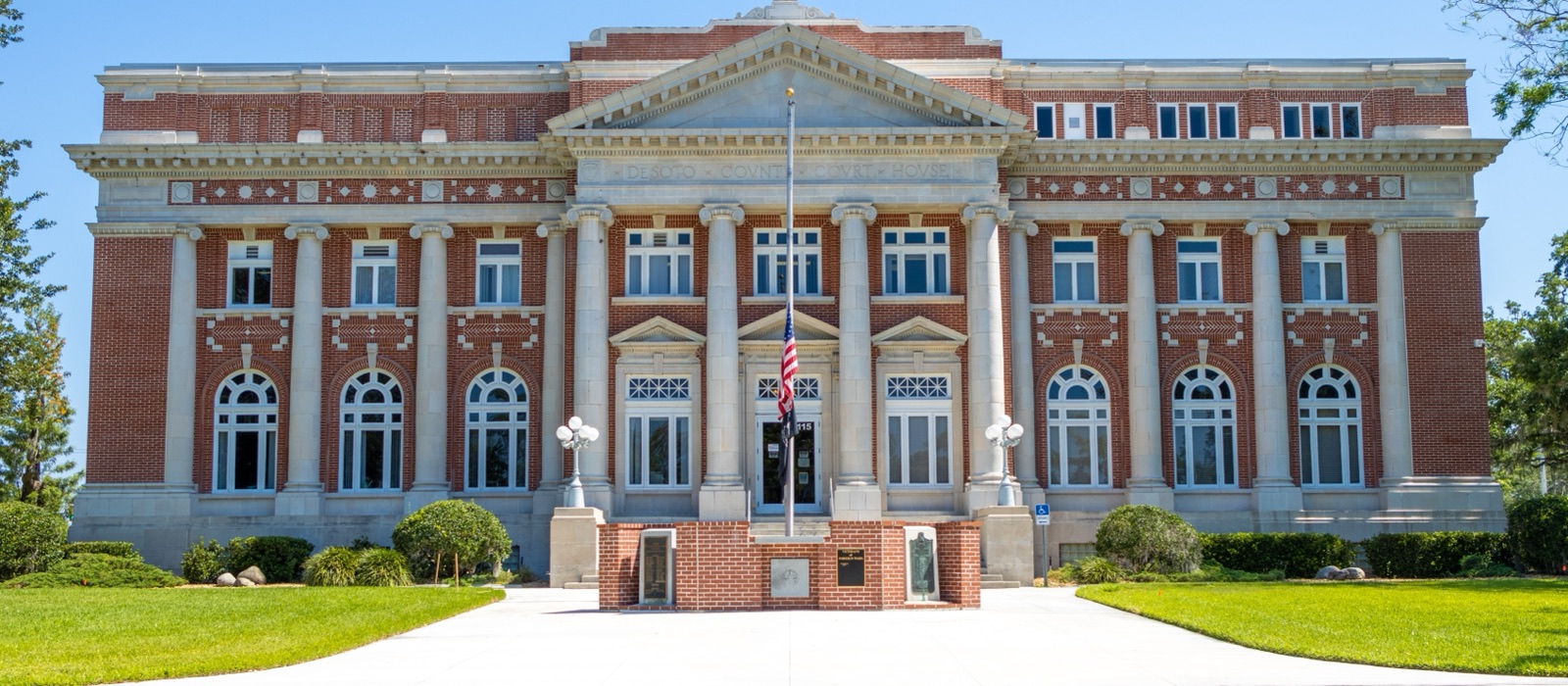
The Arcadia Historic District covers 3,400 acres including downtown and is listed on the National Register; more than 370 historic homes and businesses were placed on the Register in 1984. Oak Street is the main commercial corridor. The 1914 railroad depot survives as office space and the DeSoto County Courthouse dates to around 1912.
Cattle, Citrus and County Lines
Settlement began in the 1850s during the Third Seminole War. In the 1870s John W. Whidden, a Confederate veteran and former Manatee County clerk, settled along Joshua Creek and founded a cattle ranch running thousands of head. Early prosperity came from cattle alongside citrus and truck farming, especially watermelon. Before the county divisions of 1921, Arcadia supported over a thousand permanent residents across three thousand square miles of ranching operations.
DeSoto County was carved from Manatee County in 1887 and covers 639 square miles. Arcadia is its county seat, and the sources disagree slightly on the incorporation date: Wikipedia says 1887, a year after the Florida Southern Railway arrived, while South Florida State College's walking-tour guide puts the post office at 1883, incorporation as a town in 1886 nine months after the first train, and county seat status in 1888. Bob would say “the late 1880s” and leave the precision to the historians.
Citrus greening hurt the local citrus industry badly, which is relevant context for anyone looking at agricultural land here. Carlstrom Field operated as an air base during World War II, training both American and British pilots; the site later became G. Pierce Wood Memorial Hospital and then a juvenile facility before closing.
The Antique District and the Rodeo
The antique district occupies a compact three-block area downtown, in restored historic buildings along Magnolia, Oak and Hickory streets, described as one of the largest groupings of antique dealers in the state. There is a Fourth Saturday Antique Fair every month drawing sixty to a hundred and twenty dealers, plus ice cream parlors, cafés, florists and Rattlers Old West Saloon.
The Arcadia All-Florida Championship Rodeo, nicknamed “The Granddaddy of 'Em All,” is billed as Florida's oldest and largest. Sources put its founding at either 1928 or 1929; it began as a fundraising effort by American Legion members and became an independent nonprofit in 1952. It has been recognised by the Professional Rodeo Cowboys Association as the best rodeo east of the Mississippi, and it runs three times a year: March, the Fourth of July, and fall.
The Turner Agri-Civic Center on NE Roan Street covers ninety acres with a large air-conditioned arena, an exhibit hall and barns, hosting livestock shows, dog shows, weddings, quinceañeras, graduations, circuses, concerts and community festivals. The DeSoto County Fair runs in January.
The Arcadia Municipal Golf Course is a lovely small story. It opened partially on Christmas Day 1922, with all nine original holes finished in 1923, designed by Harry Cowie with layout help from T.J. Brantley and construction overseen by Gerald Bond, who became its first golf professional. It expanded to eighteen holes in 2001 and now plays par 72 from four sets of tees between about 4,500 and 6,000 yards, with open fairways and sloping Bermuda greens. Several of the original 1922 holes are still in play, and it is on the Florida Historic Golf Trail: a century-old public course, still open, in a town of four square miles.
The Peace River
The river is Arcadia's defining natural asset. Canoe Outpost – Peace River on CR 661 is described by VISIT FLORIDA as Florida's oldest and largest canoe outfitter, and the state's Department of Environmental Protection publishes a Peace River paddling guide. Brownville Park, a 75-acre county facility with nature trails, boat launches and camping, is the main local ramp; Gardner Boat Ramp sits upriver in Hardee County. Peace River Charters runs airboat tours, and Nav-A-Gator at Lake Suzy is the Old Florida restaurant and rental spot on the water.
Then there are the fossils, which are the reason a lot of people first come here. The riverbed yields Miocene and Pliocene material from 23 to 5 million years ago (shark teeth including megalodon, plus shells and ray plates), and Pleistocene Ice Age material including mammoth, dire wolf and ground sloth bones. Season is October through April, Florida's dry season, and you want water levels around a foot or lower at the Arcadia gauges. Fossils get exposed as the water drops, and they collect on gravel bars.
One legal point that matters and that people get wrong: shark teeth require no permit. Collecting vertebrate fossils from public lands in Florida does require a fossil permit from the Florida Museum of Natural History, and Native American artifacts may not be collected at all. Know the difference before you go digging.
To be clear about what this river is not: at Arcadia the Peace is fresh water roughly forty miles inland. It reaches salt water only down at Charlotte Harbor. There is no Gulf access and no saltwater boating from here.
Elevation, and Why It Isn't the Whole Story
Parts of Arcadia sit more than forty feet above sea level and reach as high as sixty-five feet, among the highest elevations of any Florida city; DeSoto County tops out at ninety-six feet. For a buyer accustomed to six feet of elevation on the coast, that is genuinely striking, and it is one of the main reasons people look inland after a storm.
Now the counterweight, stated as plainly as possible. Being inland is not the same as being safe from flooding.
When Ian passed over Arcadia as a Category 3 in September 2022, the Peace River crested at 25.36 feet, breaking a record of 25 feet that had stood since 1912 (a 110-year record), and running about five feet higher than Irma in 2017. Houses were submerged to the roof line. Vehicles went fully under. Roads were destroyed, sinkholes opened, SR-72 collapsed, and the Peace River Campground was lost with water to the ceiling of the office.
And critically: the flooding arrived after the storm had passed. It was riverine flooding driven by rainfall upstream in the Peace River watershed, worsened by clay and porous limestone soils on flat terrain that could not absorb it, and it persisted for days under clear skies. Storm-surge maps and coastal evacuation zones do not describe this risk at all.
So on any Arcadia property, regardless of how far it sits from the coast: pull the FEMA flood map for the specific parcel, ask the seller directly whether it took water in September and October of 2022, and price flood insurance before you write an offer. Reporting after Ian found that many Arcadia residents were uninsured and rebuilt out of pocket. Do not join them.
For history: Hurricane Charley's eye passed directly over Arcadia on August 13, 2004 with winds measured up to 109 mph, destroying or heavily damaging 3,600 homes, displacing 16,000 people, collapsing the Turner Agri-Civic Center (which had been designed for winds over 100 mph), and doing $2.3 million in damage to DeSoto Memorial Hospital. Recovery took roughly twelve years. Irma in 2017 was a Category 1 here with minor damage.
Housing, Utilities and Services
Arcadia is a compact city of 4.1 square miles with a very large historic housing inventory (over 370 listed properties within a 3,400-acre National Register district), surrounded by 639 square miles of largely agricultural county. That means acreage parcels and rural residential are a meaningful part of the DeSoto market alongside the in-town historic homes.
Buyers come here for the architecture, the elevation, the land, the price relative to the coast, and the pace. They do not come for amenities, new construction or water access, and Bob would rather set that expectation now.
The City of Arcadia's utilities department provides drinking water, wastewater collection and reclaimed water; the city does not provide electric or gas, and solid waste is handled by public works. DeSoto County runs a separate utilities department for unincorporated areas. Outside city limits, assume well and septic until proven otherwise, and order water testing and a septic inspection as a matter of course.
Rural parcels may also carry an agricultural classification that materially lowers the tax bill and that can be lost on a change of use. If you are buying land with plans, check the classification requirements with the DeSoto County Property Appraiser before you close, not after.
If you are buying a historic home, confirm what local review applies to exterior alterations before you plan a renovation.
On healthcare: DeSoto Memorial Hospital on North Robert Avenue provides emergency care, cardiology, surgical services, diagnostic imaging, behavioral health, home health, wound care, rehabilitation and pharmacy. It is a small community hospital; the nearest large-hospital and specialist infrastructure is Punta Gorda and Port Charlotte about twenty-six miles south, or Sarasota about forty miles west. State that plainly and weigh it honestly.
Schools are the School District of DeSoto County: six schools and roughly 4,300 students, including Memorial, West and Nocatee Elementary, DeSoto Middle, DeSoto County High and DeSoto Secondary, plus the Family Service Center and Jefferson Classical Academy. With a single traditional high school serving the whole county, choosing a neighborhood for its school zone (a major factor up in Sarasota and Manatee) is largely a non-issue here.
Roads: US-17 runs south to Punta Gorda and north to Wauchula and Bartow, SR-70 runs east and west, and Arcadia Municipal Airport is the county's only public-use airport. There is no interstate access; I-75 is reached by SR-70 west or US-17 south.
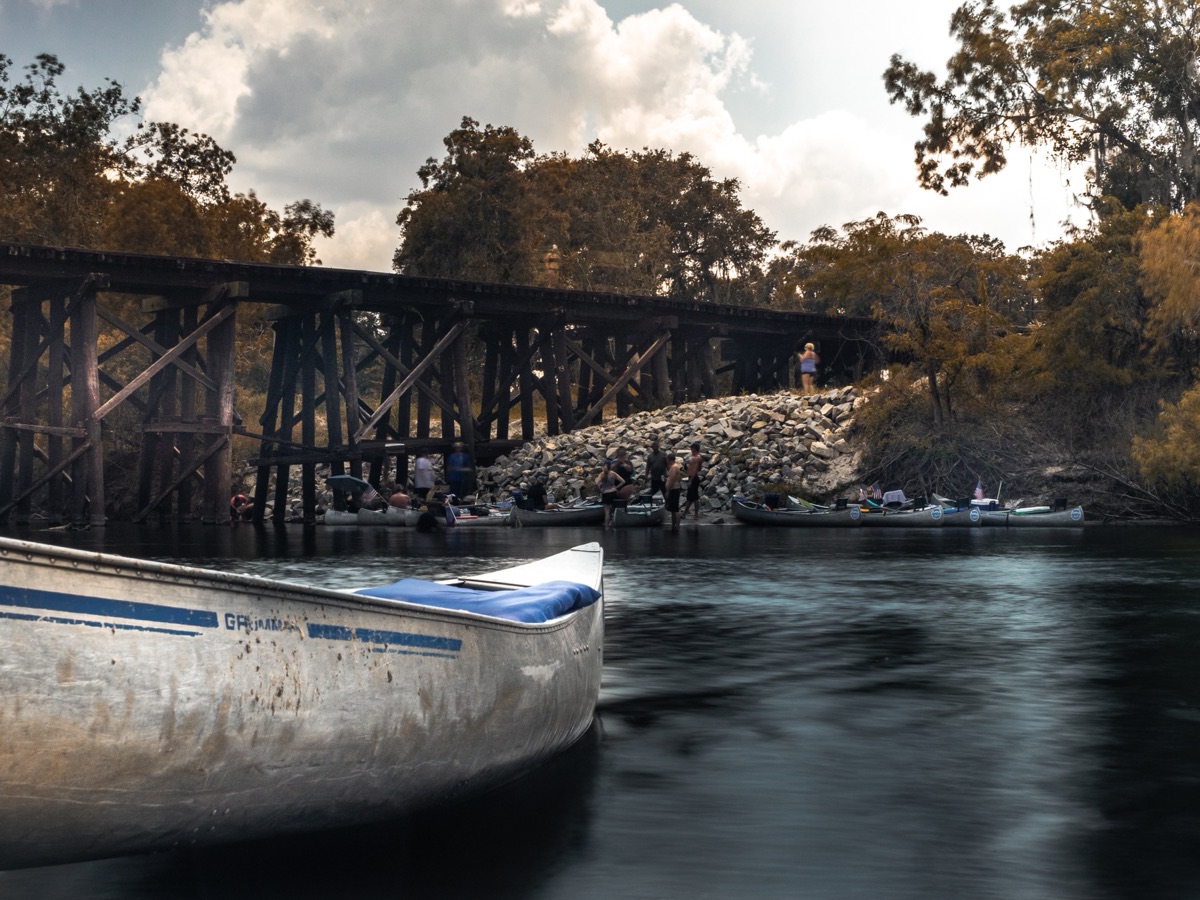
Arcadia is for the buyer who wants land, history, elevation and quiet, and who is content to drive for the coast, which, from Punta Gorda, is thirty-seven minutes up the same river. Bob knows the road well. The one thing he will insist on before you buy anything here is a hard look at riverine flood risk on the specific parcel, because the 2022 record is recent, it happened days after the sky cleared, and no surge map would have warned you about it.
Tile and header: licensed from Shutterstock (image 2460647521). Gallery: licensed from Shutterstock (image 1412751545).